
AI in Securities Finance: A Practical Approach


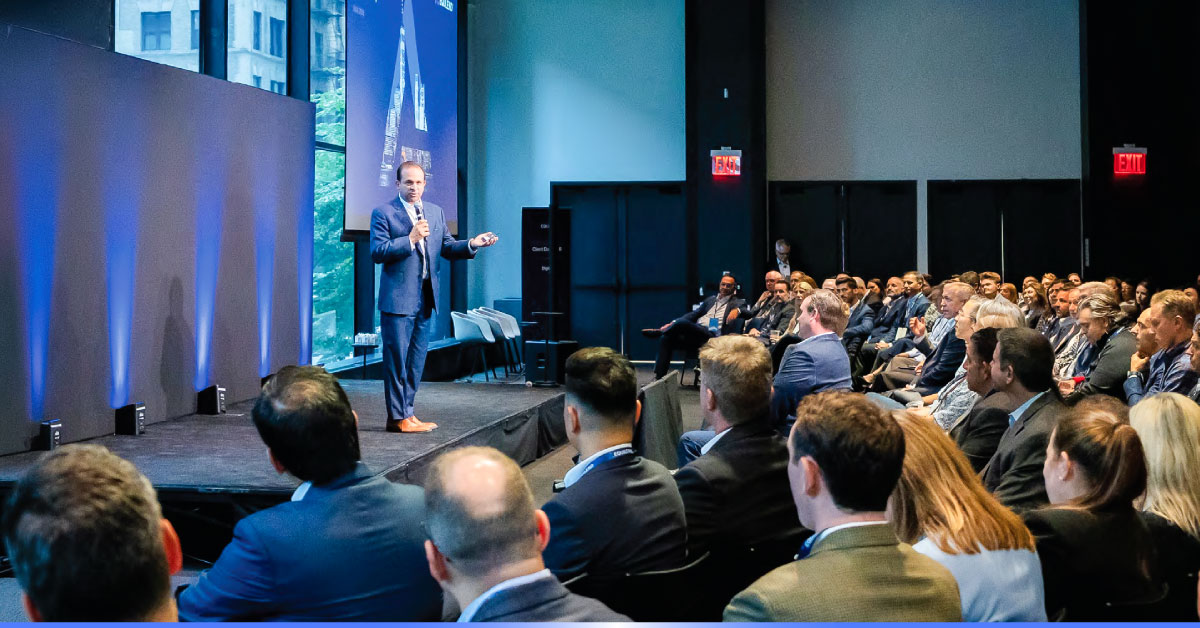
Equilend’s Nick Delikaris, Chief Product Officer, provides insight into how the firm is thinking about artificial intelligence, how it should be applied, and next steps.
In securities finance, the AI conversation has moved past ‘whether’ and into ‘how,’ and it has moved fast. For firms that operate core market infrastructure, the answer carries real weight, in what you build and, just as much, in what you deliberately leave alone.
At Equilend, we have organized our approach around three priorities.
The first is internal transformation. We are evolving toward a product engineering model, with product and engineering fused together in nimble teams making prototyping faster and AI embedded in the build cycle itself.
The results are already concrete: AI now generates more than 20% of our new code, with throughput and quality benchmarks improving in parallel. The firms that can move quickly and safely from idea to working product will hold a structural advantage, and that starts with how the people doing the work are equipped.
The second is open architecture. Rather than delivering AI as a closed feature set, we are building MCP (Model Context Protocol) connectivity across our product suites, with prototype connectors already running against Spire and our data products. Clients can bring their own AI tools (BYOAI) and integrate them with Equilend platforms directly, without bespoke work for each use case. The goal is to be a building block, not a black box.
The third is embedded AI at the product level. Our Gen-AI chatbot is live for licensed data clients across Datalend and Orbisa, and our Predictive Short Interest model, built on an internally developed AI/ML framework, is already in clients’ hands with strong early feedback. Equilend holds the core platforms and the critical control points, where regulatory compliance, data integrity, and operational resilience are non-negotiable. Clients use those as a foundation to build the lightweight, specific workflows that make their own operations faster and smarter.
The next frontier for this infrastructure is agentic AI. As AI systems evolve from answering questions to acting on them, connecting directly to markets, managing collateral, and interacting with digital asset wallets, the infrastructure underneath has to be ready. Through our partnership with Digital Prime Technologies and their Tokenet platform, Equilend is extending that foundation to digital assets, so that AI-driven workflows can operate across traditional and tokenized assets within a single book and a single risk framework.
It is worth being clear about why this is a position of strength rather than exposure. AI pressure falls hardest on businesses built on human labor, simple automation, or per-seat licensing. Securities finance infrastructure sits elsewhere. Its value comes from network effects, $122 billion in daily notional across more than 130 counterparties in 30 markets; from proprietary data measured in years rather than months; from deep workflow integration; and from the auditability and trust that a regulated environment demands. AI does not weaken those foundations. Applied well, it compounds them.
That is the practical view from where we sit. The complexity of this market, deep data, intricate counterparty relationships, and a regulatory regime that demands traceability, does not disappear under AI. But handled with intent, it becomes more manageable, and that is the work we are focused on.
[
Who We Are
Equilend is a global financial technology firm offering Trading, Workflow Automation, Data & Insights, and Digital Solutions for the securities finance industry. With offices in North America, EMEA and Asia-Pacific, Equilend operates across various jurisdictions worldwide, adhering to the highest regulatory standards. The company is committed to excellence and innovation and is consistently recognized for its contributions to the industry. Equilend is Great Place to Work Certified™ in the U.S., UK, Ireland and India and has been awarded Global Data Provider of the Year and Regulatory Solution of the Year in the Securities Finance Times Industry Excellence Awards 2025. For more information, please visit www.equilend.com
](/)

Nick Delikaris
Chief Product Officer